


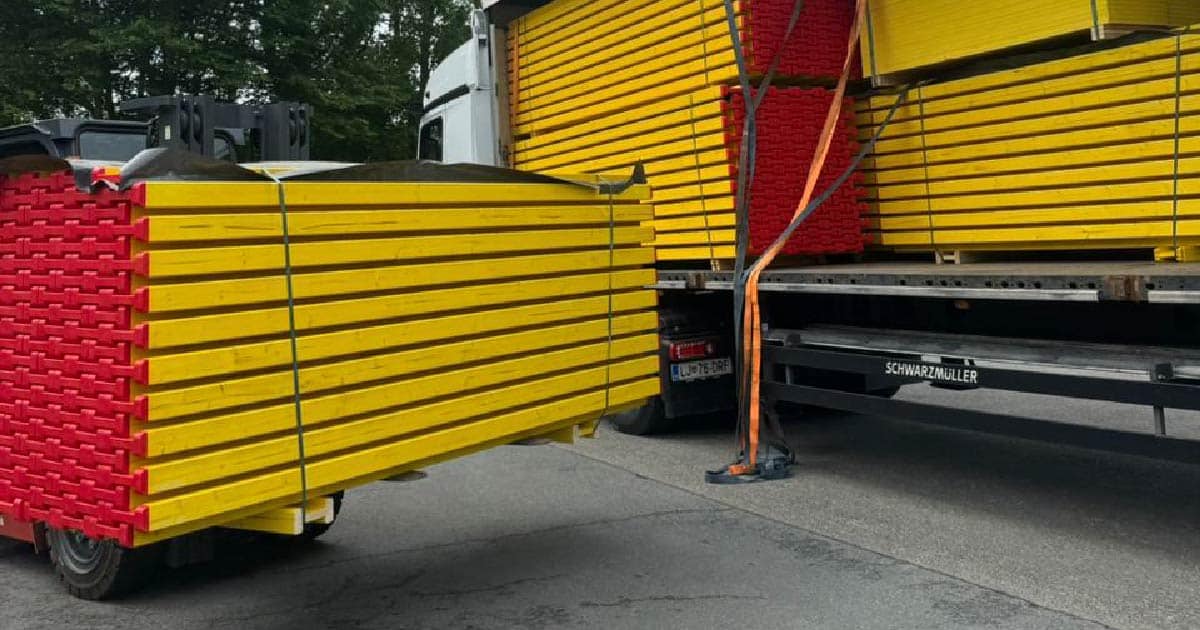
Introduction
In the construction industry, the choice of formwork equipment is a strategic decision that directly influences the profitability, safety, and quality of your structures. The H20 beam has established itself as the essential reference on modern construction sites, whether it is concrete slabs, floors or complex structures. But what exactly are the strengths that explain its success? In this article, we review the 7 concrete advantages of H20 beams to help you optimize your worksites.
Advantage 1—Exceptional lightness for easy handling
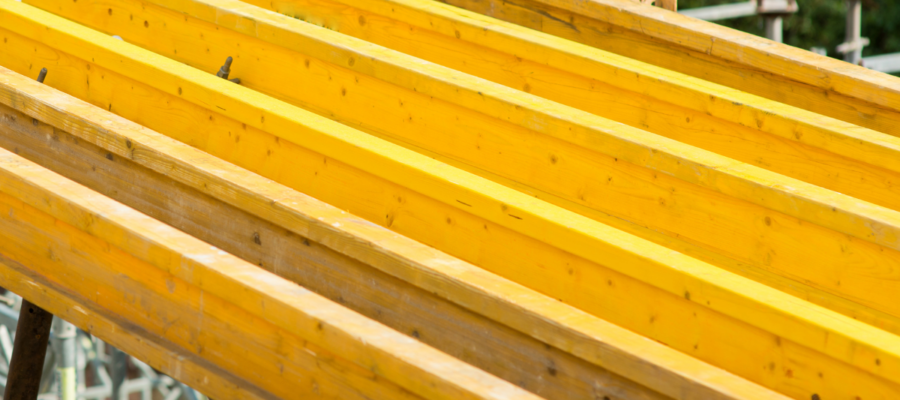
The H20 beam is made of glued laminated timber, which gives it a much lower weight than metal or steel beams. Weighing on average between 4 and 6 kg per linear meter depending on the length, it can be handled by hand by a single person without using lifting equipment.
Concrete benefits: reduction in set-up time, reduced risk of musculoskeletal disorders for your teams, and productivity gains across the entire site.
Advantage 2—Remarkable mechanical strength
Despite its light weight, the H20 beam offers high load-bearing capacity. Its double T-shaped section (hence the “H”) optimizes the distribution of loads and allows it to withstand significant pressures related to fresh concrete. The plywood cores and solid wood footings work in synergy to resist bending. It can be used on spans ranging from 0.60 m to more than 6 m depending on configurations, making it a versatile tool for standard concrete loads on common floors.
Advantage 3—Versatility for use on all types of construction sites
The H20 beam is suitable for many applications in the field of civil engineering and construction:
• Formwork for horizontal slabs
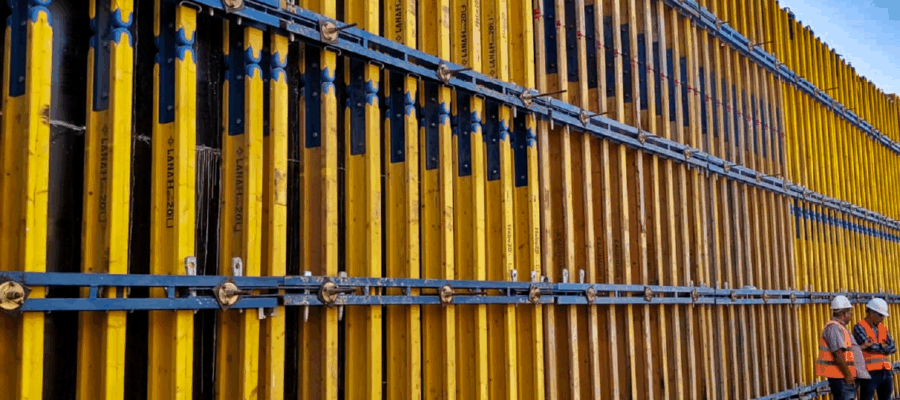
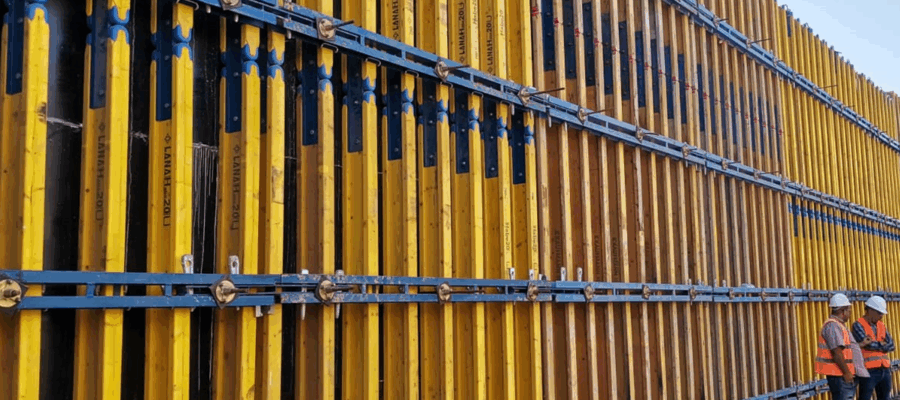
• Vertical wall formwork (with benches)
• Temporary support structures
• Floors for residential and tertiary buildings
• Structures and bridges (for small spans)
Advantage 4—Standardization and compatibility with all formwork systems
The H20 beam is a standardized product: its 20 cm high section (hence its name) is universal and compatible with almost all formwork systems on the market. This standardization allows you to freely combine equipment from different origins and simplify the management of your fleet.
Advantage 5—Durability and longevity, a cost-effective investment
Well maintained, a quality H20 girder can withstand between 50 and 200 reuses depending on the conditions of use. Unlike steel, wood does not rust and is well resistant to the ambient humidity of construction sites when properly protected. Handy tip: clean the footings after each use, store beams flat and above ground, and replace damaged elements to maintain the safety and durability of your equipment.
Advantage 6—Excellent value for money
Compared to metal formwork systems, the H20 truss represents a cost-effective solution for purchase or rental. Its unit price remains accessible, and the possibility of reusing it many times significantly reduces the cost per use.
Advantage 7—Environmentally friendly choice
In a context where the ecological transition is essential in the construction industry, choosing the H20 glued laminated timber beam means opting for a renewable material with a low carbon footprint. Wood sequesters CO2 throughout its lifespan and, at the end of its cycle, used beams can be recovered as biomass energy.
In addition, European manufacturers comply with certifications such as PEFC or FSC, ensuring sustainable management of supply forests.
Conclusion
The H20 joist combines all the advantages that a building professional can look for: lightness, resistance, versatility, universal compatibility, durability, economy and respect for the environment. Whether you are a prime contractor, site manager or purchasing manager, integrating the H20 beam into your formwork solutions is a winning strategic choice. Ready to optimize your next projects? Check out our catalog or contact our team for a personalized quote.
Related Posts