



Are you preparing a formwork or shoring project?
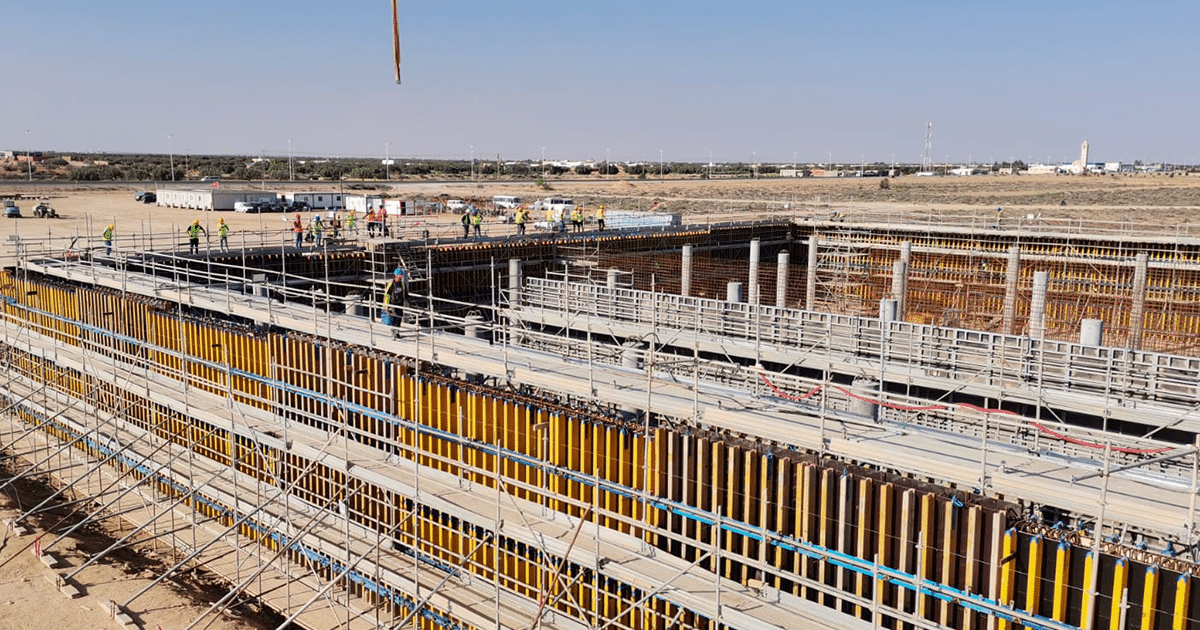
On a structural construction site, the performance of a shoring system depends on more than just the capacity of the equipment used. Load distribution, structural stability, level adjustment, and assembly organization are all factors that directly influence the system’s efficiency.
For formwork operations involving slabs, beams, and floors, a well-coordinated configuration of shoring towers, jacks, forkheads, frames, diagonal braces, and formwork beams allows for better control over the various stages of the project.
At Alchary, shoring solutions are designed to suit various site configurations, featuring modular towers, masonry props, and accessories that allow the systems to be adapted to project requirements.
Before positioning the equipment, the first step is to understand how loads will be transferred.
In a slab formwork system, loads generally follow a transfer chain:
Fresh concrete → panels → joists → forkheads → towers or props → ground
Each element must therefore be positioned in a way that is consistent with the overall system.
Poor distribution can lead to excessive load concentration on specific support points. Conversely, a well-planned layout allows forces to be distributed across multiple supports.
Shoring towers are particularly well-suited for configurations requiring the support of heavy loads from slabs, floors, and beams.
Height is another decisive factor.
For work at moderate heights, adjustable masonry props can be a practical solution for temporary support and formwork needs. Alchary offers adjustable metal props suitable for various heights.
When the height increases or loads become heavier, a tower structure provides a more organized support system.
Alchary offers adjustable towers ranging from 4 to 5 meters, as well as models adjustable from 5.50 to 6.50 meters.
However, the choice should not be based solely on height; load, formwork configuration, support conditions, and overall stability must all be considered together.
Supporting vertical loads is not enough to ensure the overall stability of a tower.
Bracing plays a key role in the rigidity of the assembly. Diagonal braces, in particular, enhance the lateral stability of frame-based structures.
In Alchary shoring towers, frames and diagonal braces are combined to create a stable structure. Diagonal braces for 2- and 3-rung frames are among the accessories available to increase lateral rigidity.
The principle is simple: a properly braced structure limits lateral movement and maintains its structural integrity throughout the various stages of use.
Stability begins at ground level.
A perfectly assembled tower cannot function correctly if its supports are not suited to actual site conditions.
Base jacks, in particular, allow for the precise adjustment of support point heights and compensate for surface irregularities. Alchary offers galvanized base jacks designed for the assembly of shoring towers.
Before assembly, it is therefore important to check:
* the nature and condition of the supporting surface;
* the ground’s load-bearing capacity;
* the levels of the various support points;
* the stability of the bases;
the absence of weak areas or zones prone to deformation.
The jacks must be adjusted in accordance with the system’s intended configuration.
The connection between the shoring structure and the formwork is also crucial.
Head forks are used to support the beams required for slab formwork. The double-entry forks offered by Alchary are specifically designed to support the beams needed to construct slab formwork.
This connection creates continuity between:
tower → fork → H20 beam → panel → concrete
The goal is to achieve consistent load transfer while maintaining a correctly positioned system.
The shoring system must not be designed in isolation from the formwork.
The layout of the shoring towers must take into account the positioning of the beams and panels to ensure an even distribution of support points.
In a configuration using H20 beams, for example, the arrangement of supports must be determined based on the formwork system’s specifications and the anticipated loads.
This also helps avoid an excessive number of supports where they are not needed, while still guaranteeing the required level of support.
The efficiency of a shoring system also depends on site logistics.
Proper preparation helps reduce unnecessary movement and minimize assembly time.
Before installation, it is beneficial to prepare:
* the required number of towers;
* frames;
* diagonal braces;
* jacks;
* fork heads;
* decking/platforms;
* safety accessories;
* handling equipment.
Alchary shoring tower kits bundle the various components needed to build a complete structure—including jacks, fork heads, frames, diagonal braces, decking, and guardrails—based on the specific configurations offered.
This organization streamlines equipment preparation prior to its arrival in the assembly area.
Organization does not end with assembly.
Dismantling must also be planned for in advance to prevent material from piling up on the work site and to facilitate its reuse.
Effective organization makes it possible to:
* group components by type;
* designate a storage area;
* facilitate equipment inspection;
* prepare equipment for future use;
* reduce unnecessary handling.
For work sites that frequently use props, Alchary also offers storage solutions such as the collapsible rack—designed for the storage and transport of props.
Before applying any load, a comprehensive system check ensures that the various components are correctly positioned.
In particular, the following should be checked:
Supports → levels → frames → diagonal braces → jacks → forkheads → beams → formwork
This check makes it easier to detect incorrect positioning, missing components, or assembly defects.
For temporary systems supporting heavy loads, checks and structural sizing must be carried out by competent persons in accordance with the rules and specifications applicable to the project.
Optimizing a shoring system is not simply a matter of adding more supports.
Performance relies instead on a coherent configuration of the entire system:
* a layout adapted to the loads;
* properly prepared bearing surfaces;
* controlled heights;
* appropriate bracing;
* correctly positioned forkheads;
* a coherent connection to the formwork;
* efficient logistical preparation;
* assembly and inspection carried out according to technical specifications.
This approach enables better site organization while ensuring equipment is used in a manner consistent with its intended function.
To suit various site configurations, Alchary offers a comprehensive range of shoring solutions, including:
Masonry props • Shoring towers • Galvanized frames • Diagonal braces • Base jacks • Fork jacks • Head forks • Double-entry forks • Decking • Guardrails
Our shoring towers are available in various heights and configurations—specifically 4–5 m and 5.50–6.50 m—as well as other dimensions to meet specific requirements. A wide range of accessories is also available to configure, complete, and adapt the structures to the specific requirements of each job site.
Are you preparing a formwork or shoring project?
Discover Alchary solutions and choose the equipment best suited to your project.

 WhatsApp