An overview of good practices to improve safety on site, reduce risks and ensure the protection of teams on a daily basis.
1. Why is job site safety crucial?
The building and public works (BTP) sector is one of the most accident-prone in the world. In France, it represents nearly a third of fatal work-related accidents, while it only employs about 8% of the salaried workforce.
Beyond the numbers, each accident has a considerable human, financial and legal cost: work stoppages, penalties, damaged reputation. Investing in prevention means protecting people and ensuring the sustainability of activity.
2. The main risks on a construction site
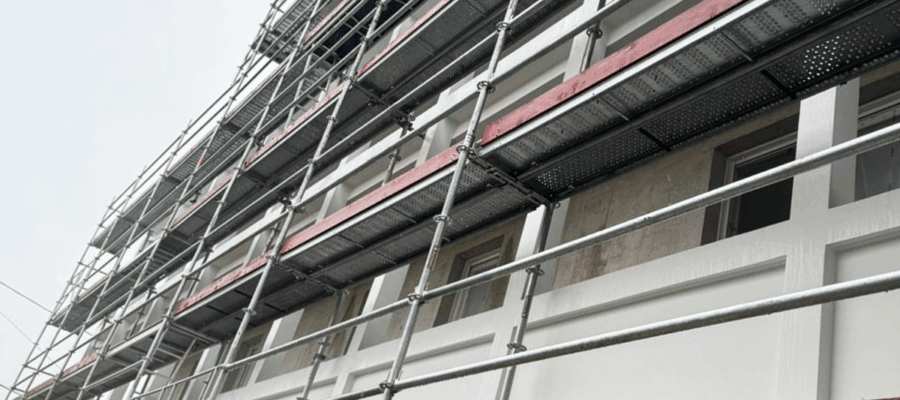
- Falls from height represent the most deadly risk on a construction site. Whether it is a poorly fixed scaffolding, a roof without railing or an unprotected hopper, a fall of a few meters can be fatal. That is why any intervention at a height must be subject to strict collective and individual protection measures, even before the first worker goes up.
- Electrical risks are often underestimated, yet they cause many severe accidents every year. On a construction site, the sources of danger are multiple: buried cables not detected, temporary electrical installations defective, poorly insulated tools or work areas too close to live lines. A simple mistake of inattention can cause an electrocution or fire.
- Burial occurs primarily during earthworks, excavations or trenches. The sudden collapse of an earthen wall can trap a worker in seconds, without giving him time to react. This risk is all the more dangerous as it is often neglected on small sites where excavations seem shallow.
Collisions and crushing related to construction equipment are another major cause of accidents. Excavators, loaders, dump trucks—these machines evolve in small spaces, with significant blind spots. The co-activity between pedestrians and vehicles must be strictly organized, with separate traffic areas and clear signage to avoid accidental contact.
- Noise disturbances, although invisible, represent a real and lasting professional risk. Prolonged exposure to high sound levels, such as those produced by drills, jackhammers or chainsaws, results in irreversible occupational deafness. Above 80 dB(A), wearing hearing protection becomes mandatory, and the employer must implement a noise reduction plan at source.
- Finally, chemical risks are omnipresent on many construction sites, especially during renovations. Asbestos, solvents, paints and silica dust can cause serious and sometimes fatal occupational diseases that occur years after exposure. These substances require specific handling procedures, appropriate protective equipment and, in some cases, the use of specialized and certified companies.
3. Personal protective equipment (PPE)
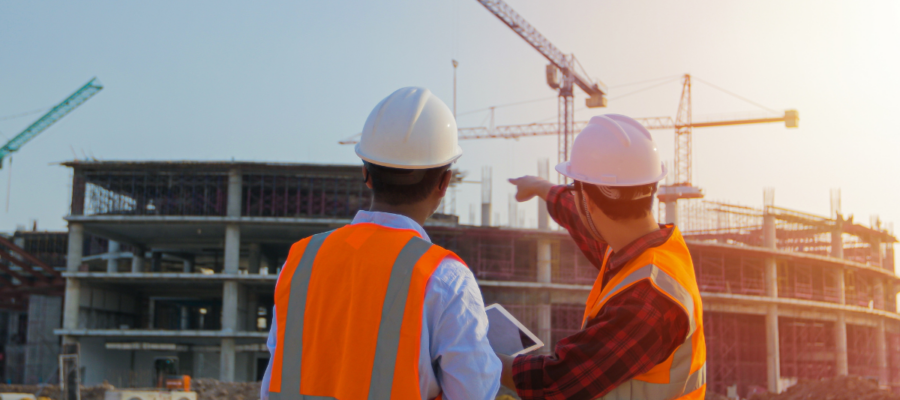
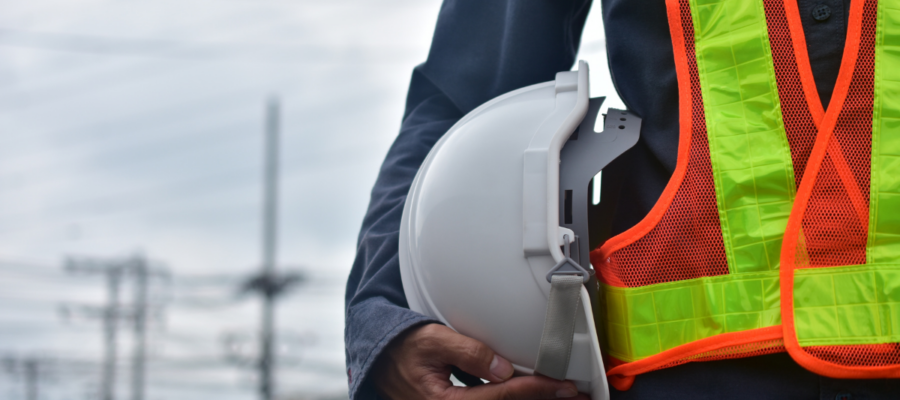
The wearing of PPE is mandatory on any construction site. These equipment do not replace collective protections, but constitute the last bulwark against the accident.
| Equipment |
Insured protection |
| Safety helmet |
Falling objects, cranial bumps |
| Safety shoes |
Crushing, puncturing, sliding |
| High visibility vest |
Visibility with the machines |
| Glasses and masks |
Projections, dust, vapors |
| Protective gloves |
Cuts, burns, chemicals |
| Fall arrest harness |
Work at height (>2 m) |
| Hearing protectors |
Noise zones 80 dB(A) |
[/vc_column_text]
4. The fundamental safety rules
Beyond equipment, safety on site relies on precise behaviors and procedures:
1
Conduct a risk analysis before each intervention
The Special Safety and Health Protection Plan (PPSPS) must be established and respected.
2
Never work alone in a risk area
Work at height, confined spaces, proximity of machines: always a binomial.
3
Keep the construction site clean and organized
Store tools, clear traffic lanes, manage waste properly.
4
Check the material before each use
Machinery, scaffolding, power tools: any defective equipment must be removed immediately.
5
Report any incident or dangerous situation
Reporting culture prevents future accidents. No incident should be minimized.
5. The signage and delimitation of the construction site
A well-delimited and properly signalized site protects both workers and the public. The barriers, nets, prohibition signs and fences must be installed as soon as the work starts and checked daily.
Temporary road signage (SRT) is mandatory for any construction site near a traffic lane. It must comply with the regulations in force and installed by authorized personnel.
CACES
Driving construction equipment
SST
Rescuer First Aid Worker
Electrical accreditation
Work in the vicinity of facilities
Working at heights
Use of the harness and PPE
7. The legal obligations of the employer
In France, the Labor Code imposes a general safety obligation on employers. Concretely, this means:
- Assess and document risks in the Single Occupational Risk Assessment Document (DUERP)
- Provide and maintain PPE for free
- Organize regular trainings and evacuation drills
- Designate an SPS (Safety and Health Protection) coordinator for category 1 and 2 worksites
- Declare any work accident within 48 hours
Conclusion
Safety on site is not an administrative constraint: it is a culture to be built together, every day. Each prevention measure adopted can save a life. Site manager, work supervisor or simple worker—everyone has a role to play.
[/vc_column][/vc_row]



 WhatsApp