



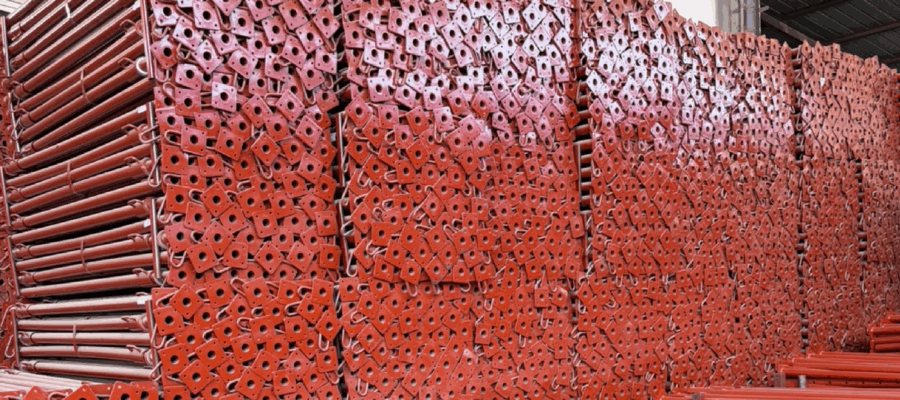
Need advice on sizing the shoring for your site?
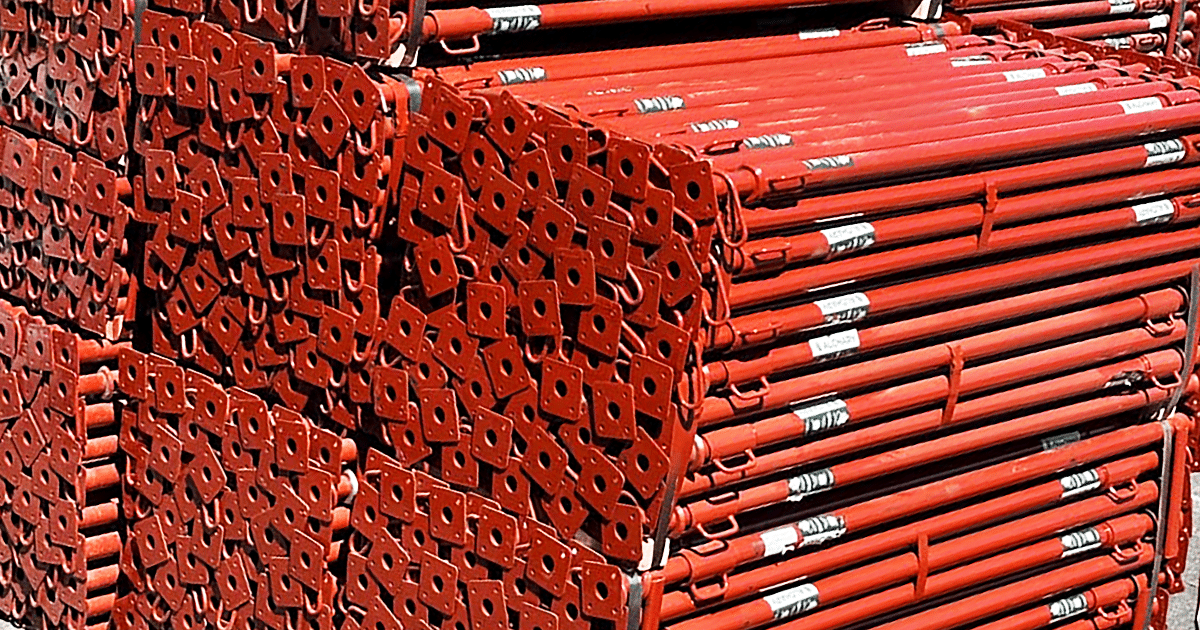
On a construction site, shoring plays a quiet but crucial role: it temporarily supports a floor, beam, lintel, or formwork until the structure reaches its final strength. Poorly sized or improperly installed shoring can compromise the stability of an entire structure. Here’s how to choose the right equipment and use it properly.
Two types of equipment meet different needs on a construction site.
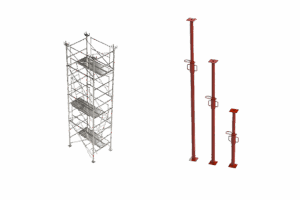
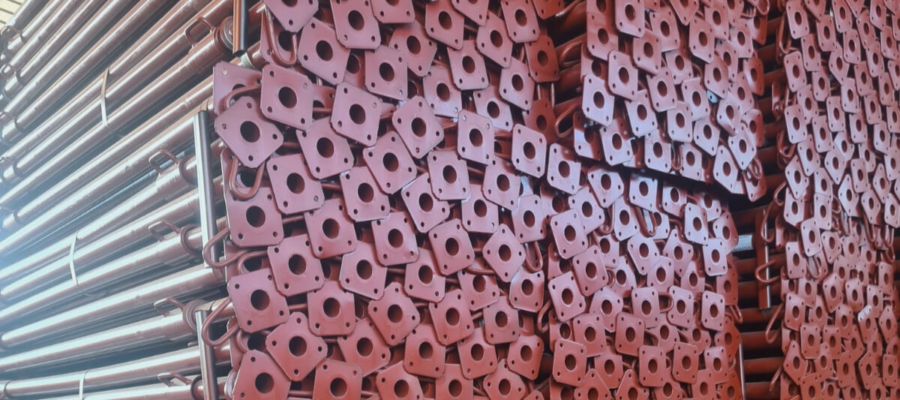
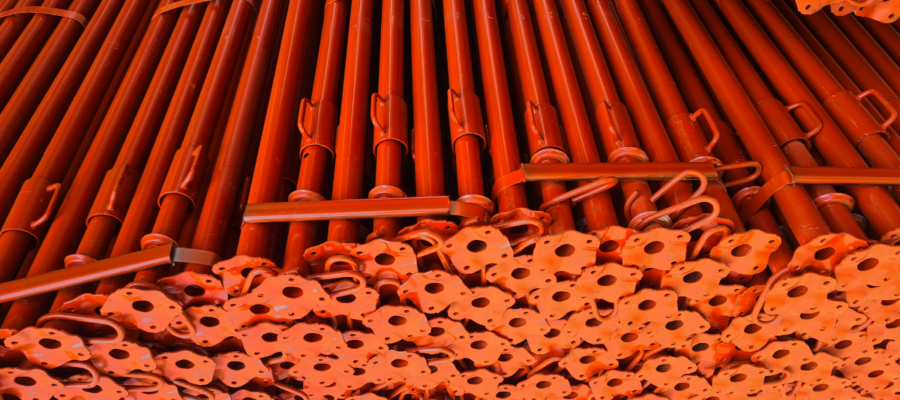
A mason’s prop is a temporary, height-adjustable support, used to locally hold up a beam, lintel, or formwork element.
Simple to set up, it’s suitable for small spans and moderate loads.
A shoring tower is a more complex structure, made up of multiple assembled elements, which allows it to carry heavy loads over large heights or wide surfaces, typically for supporting concrete floors or extended horizontal formwork.
The choice between the two mainly depends on the load to be handled, the working height, and the area to be covered.
Before any setup, several things need to be considered:
* the load to support, taking into account the structure’s own weight and operational loads (personnel, equipment, fresh concrete);
* the type of soil under the prop or tower, which needs to be stable and able to bear the loads without settling;
* the clear height, to choose a prop or tower whose adjustment range really matches the need;
* the spacing between props, calculated based on the span of the supported element, to avoid excessive bending.
When in doubt, it’s always better to slightly over-engineer the shoring rather than underestimate it: the cost of an extra prop is nothing compared to the consequences of a collapse.
Once the equipment is chosen, several good practices ensure reliable shoring:
* stabilize the base: each prop should rest on a stable, level footing, never directly on loose or uneven ground;
* adjust gradually: the load on a telescopic prop should be applied smoothly, while checking vertical alignment;
* brace the shoring towers: diagonals and cross braces aren’t optional—they ensure the lateral rigidity of the structure;
* check the locking: the locking systems (pins, adjustment nuts) should be properly tightened and checked regularly throughout the shoring period;
* never remove shoring too early: the stripping time depends on the type of structure, temperature, and concrete mix—removing it too soon is one of the main causes of accidents on major construction sites.
Shoring, which involves removing part of the formwork while keeping reduced support, helps save time on fast-paced construction sites. It’s a recognized practice, but it must follow a precise distribution of the supports that are kept in place until the concrete reaches sufficient strength. It can’t be improvised and should be planned from the very beginning of the project.
The reliability of a prop or shoring tower also depends on its overall condition:
* check the equipment before each use (bends, damaged threads, corrosion);
* clean the parts after the job to prevent the adjustment systems from getting gunky;
* store it away from moisture to extend the life of the equipment.
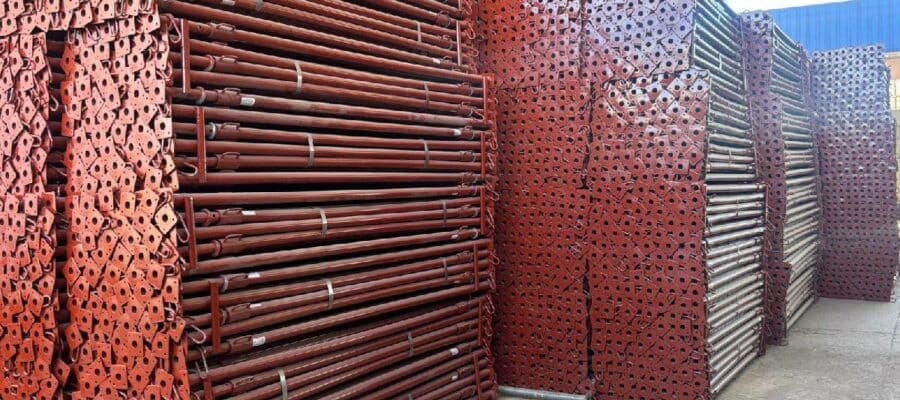
At Alchary, we offer a full range of masonry props, telescopic props, and scaffold towers, available for purchase or rental depending on the length and scale of your project.
Need advice on sizing the shoring for your site?
Contact our experts or take a look at our shoring catalog directly.
 WhatsApp