



Need advice on choosing and sizing your props?
Simple in appearance, the builder’s prop is actually one of the most heavily used pieces of equipment on a construction site. It supports a beam during concrete pouring, holds up a floor slab during underpinning work, or supports horizontal formwork. When used correctly, it is reliable and versatile. When used incorrectly, it can become a safety hazard. Here’s how to get the most out of it.
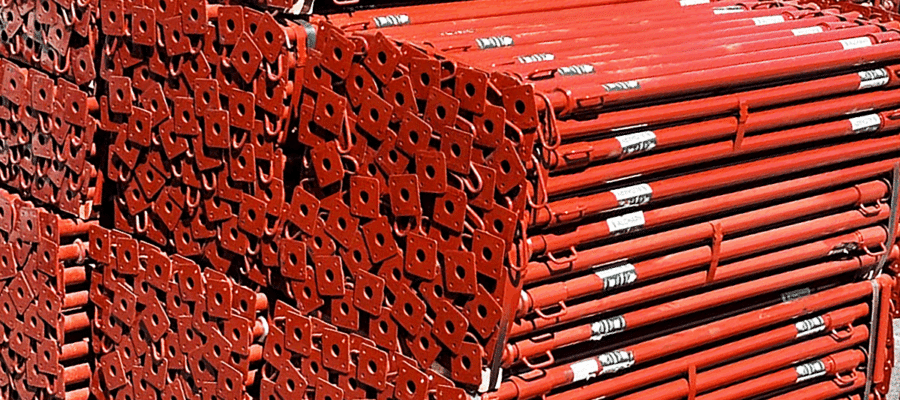
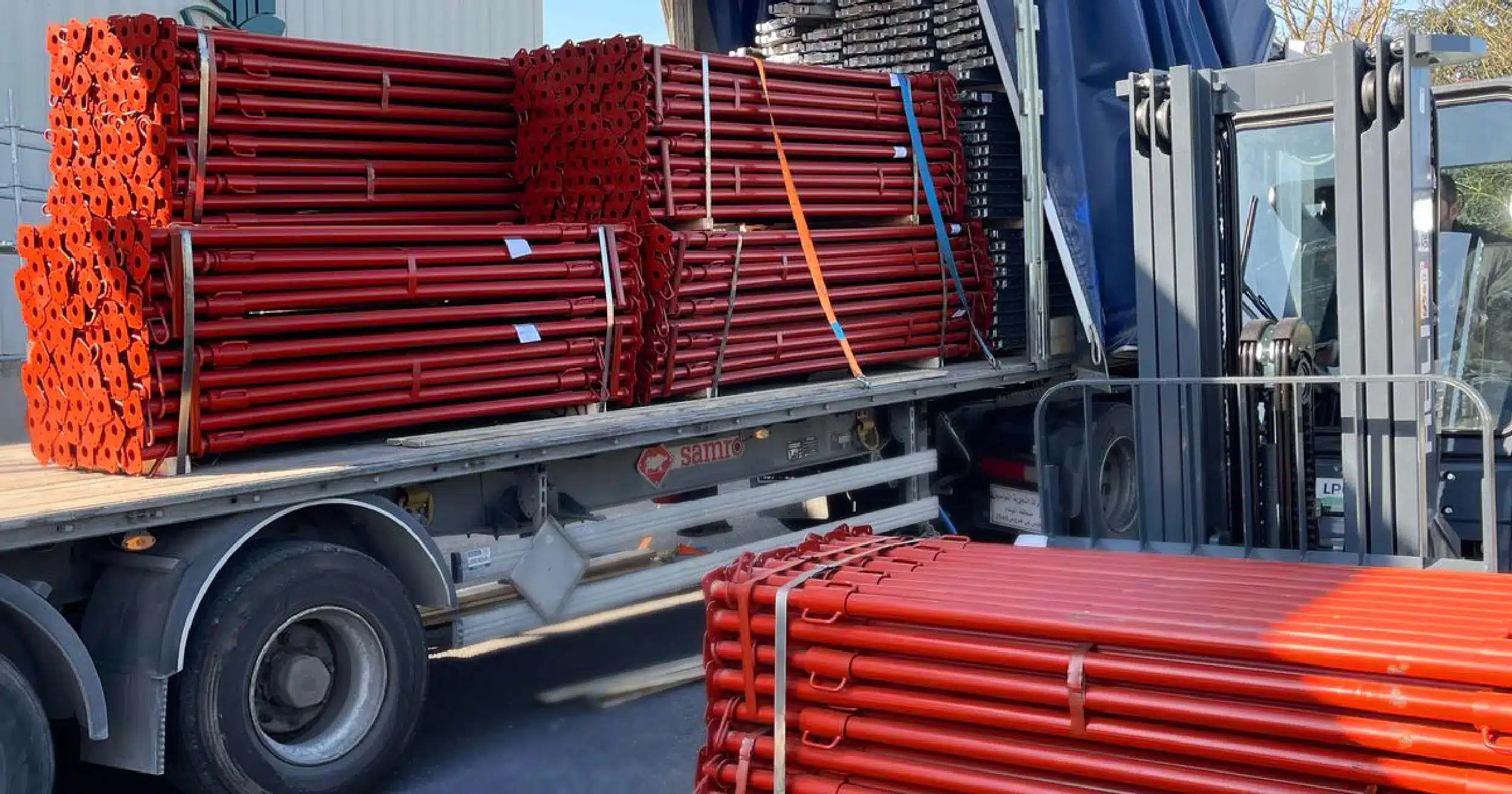
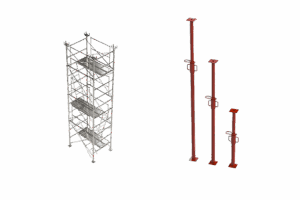
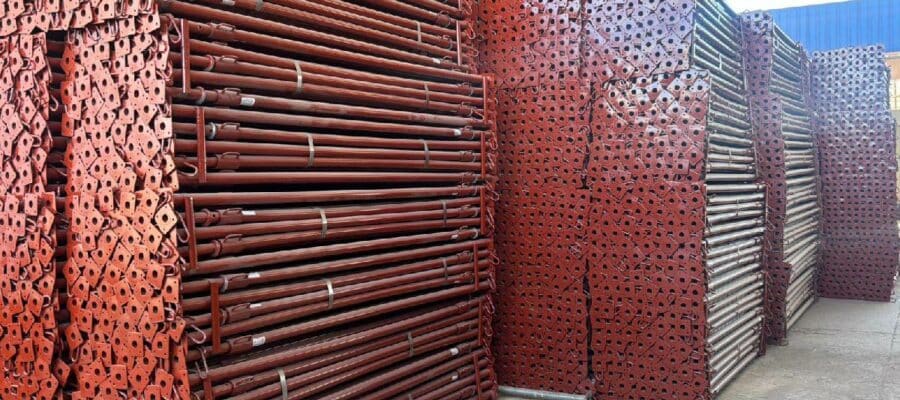
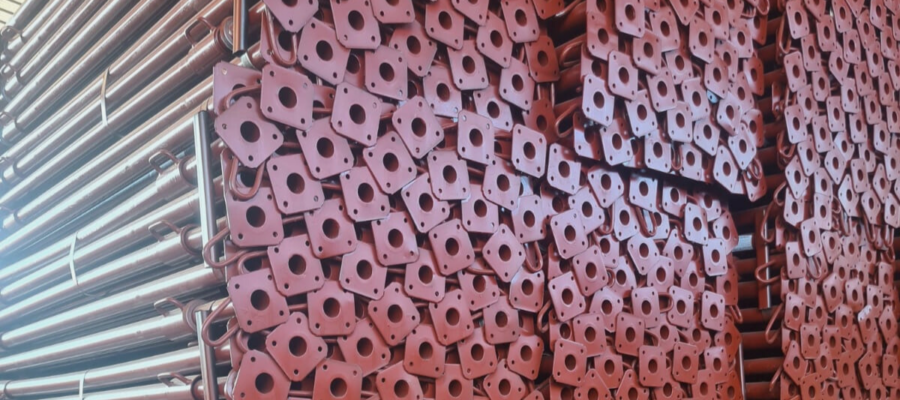
A builder’s prop, also known as an adjustable telescopic prop, is a height-adjustable metal support. It consists of two sliding tubes: an outer fixed tube and an inner tube that extends to adjust the height. An adjustment system (nut or sleeve) allows the prop to be locked into position and gradually loaded.
Its main advantages include:
* quick height adjustment without complex tools;
* great versatility, from slab formwork to beam shoring;
* easy handling thanks to its relatively low weight;
* reusability across numerous construction sites.
Builder’s props are used in a wide range of construction applications:
* supporting horizontal formwork (slabs, floors and beams) during concrete pouring and curing;
* providing temporary support for floor structures during renovation work;
* supporting a beam or lintel when creating an opening in a load-bearing wall;
* carrying temporary loads during different phases of construction work.
Not all props are designed to meet the same requirements. Before making your choice, check the following:
* height adjustment range: it must cover the actual height to be supported, with some allowance, without being extended to its maximum limit;
* load capacity at the intended working height: a prop’s load-bearing capacity decreases as it is extended to greater heights;
* quality of surface protection: galvanised or painted props offer better resistance to moisture and corrosion;
* condition of the threads and adjustment system, which are essential for reliable locking.
A few simple rules help ensure reliable shoring:
* position the prop vertically on a stable, level supporting surface;
* use base plates or load-distribution plates at the bottom and top to spread the load, particularly on soft ground or fragile surfaces;
* gradually adjust the height until contact is made, then apply the load without sudden movements;
* secure the locking mechanism (pin or nut) and check that the prop is firmly in place;
* use multiple props at regular intervals rather than overloading a single support.
Certain practices are common but can compromise the stability and reliability of a shoring system:
* using a bent, dented or rusted prop whose load-bearing capacity may be compromised;
* extending the prop to its maximum length, where its load-bearing capacity is lowest;
* installing a prop at an angle: this causes it to work under bending stress, which it is not designed to withstand;
* removing props too early, before the concrete has reached sufficient strength;
* mixing props of different models or conditions within the same structure.
Properly maintained props can last for many years:
* clean them after every construction project, particularly threads clogged with concrete;
* lightly lubricate moving parts to ensure smooth height adjustment;
* systematically inspect each prop before use (deformation, welds and unusual play);
* store them away from moisture, preferably upright or lying flat without excessive stacking.
At Alchary, we offer builder’s props and adjustable telescopic props in various heights, available for both purchase and rental depending on the duration and scale of your construction project.
Need advice on choosing and sizing your props?
Contact our experts or browse our shoring equipment catalogue.
 WhatsApp