
Introduction
In the field of building and public works, supports are essential elements to ensure the stability of structures under construction or renovation. But what is the maximum load that a prop can support? This question is crucial to ensure safety on the construction site and optimize the choice of equipment. This article sheds light on the load capacities of the struts and the criteria to take into account.
The different types of struts and their load capacity
The load capacity of a strut varies depending on several factors, including its model, design, and the material used. Here are the main categories of sets:
1. Mason’s stitches
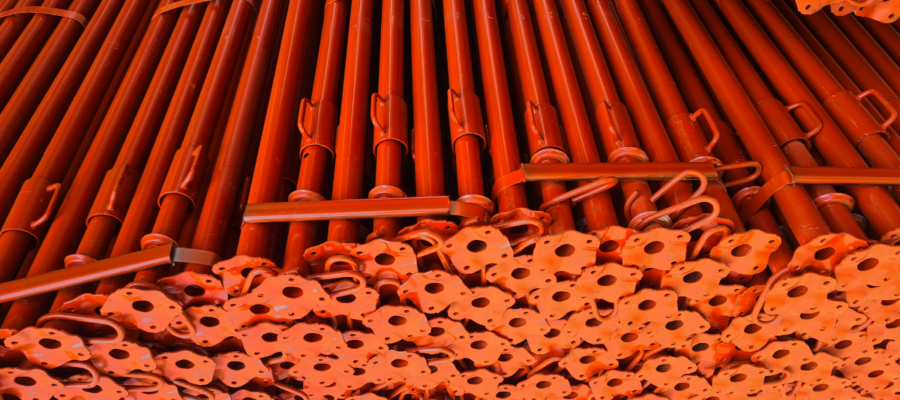
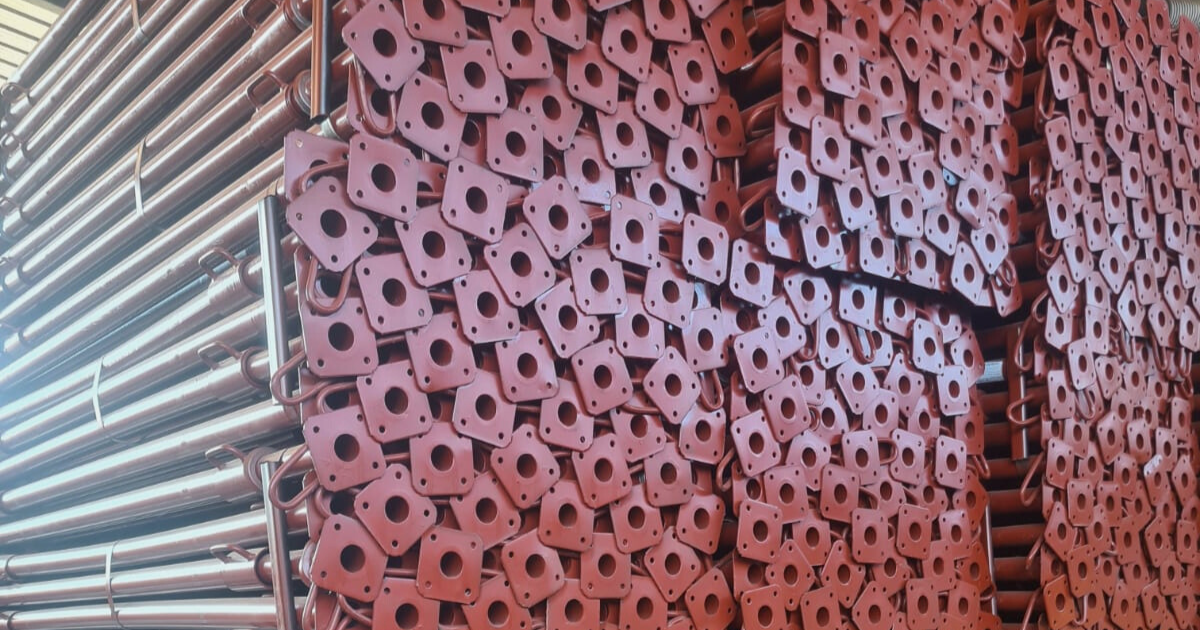
Mason stays are essential elements for the temporary support of structures during construction. They allow slabs, lintels or beams to be held in place before the concrete hardens. Their load capacity depends on several criteria such as their height, diameter and material. In general:
• A standard masonry strut can support between 1 and 3 tons.
• A reinforced strut can reach 5 tons.
The masonry supports are adjustable in height, which allows easy adaptation to different construction site configurations. Made of galvanized or painted steel, they withstand harsh conditions and guarantee great durability.
Advantages of brickwork stays include:
• Ease of installation : Quick and secure adjustment.
• Versatility : Used for various types of construction, from residential to large projects.
• Robustness: Designed to withstand heavy loads while ensuring maximum safety.
2. Shoring towers
3. Comparison between mason stays and shoring towers
Masonry stays and shoring towers exhibit distinct characteristics depending on their load capacity, use, maximum height, ease of installation, and adaptability.
The masonry supports a load of 1 to 5 tons and mainly serve as temporary support for floors and formworks.. They are simple to install and can reach heights generally up to 5 meters. Their flexibility allows them to be used on a wide variety of projects.
In contrast, shoring towers are designed to support heavier loads, ranging from 5 to 10 tons or more. They are ideal for maintaining complex structures and supporting larger loads. Their height can exceed 12 meters, but their installation requires a more complex assembly. Large constructions particularly use these shoring towers, which offer a higher specialization than mason stays.
Factors influencing load capacity
The actual capacity of a strut does not depend solely on its type. Several other factors come into play:
• The height of use : The more a strut is deployed, the more its load capacity decreases.
• Soil quality : A stable and homogeneous support is necessary to ensure a balanced load distribution.
• Load distribution: A poorly distributed load can lead to point overload and cause failure.
• Environmental conditions : Humidity, corrosion and extreme temperatures can alter the strength of the material.
• Assembly and installation: Improper positioning or locking of the struts can weaken their overall performance and present a safety risk.
• Maintenance of equipment: A poorly maintained strut can see its strength decrease over time, particularly due to rust or wear on moving parts.
Best practices for optimizing the use of the étais
To effectively use the supports and secure the construction site, follow these good practices:
* Choose the right type of strut based on the load to be supported and the required height.
* Check the condition of the equipment before each use, especially the absence of cracks, deformations or corrosion.
* Ensure the stays rest on a stable floor and use backing plates if necessary.
* Do not exceed the load capacity indicated by the manufacturer.
* Use suitable accessories, such as bearing heads or braces, to reinforce the stability of the structures.
* Follow the assembly and disassembly procedures to avoid any risk of accident.
* Perform regular inspection of the installations, particularly on long-term construction sites.
Conclusion
The load capacity of a strut varies according to its type, material, and conditions of use. The choice between a mason’s prop and a shoring tower depends on the specific needs of the site. To ensure the safety and efficiency of work, it is essential to properly evaluate the loads to be borne and to adopt good installation practices. Careful planning helps avoid incidents and optimizes the progress of work.
[/vc_column_text]
Related Posts
