




Need some tips to safely set up your construction site?
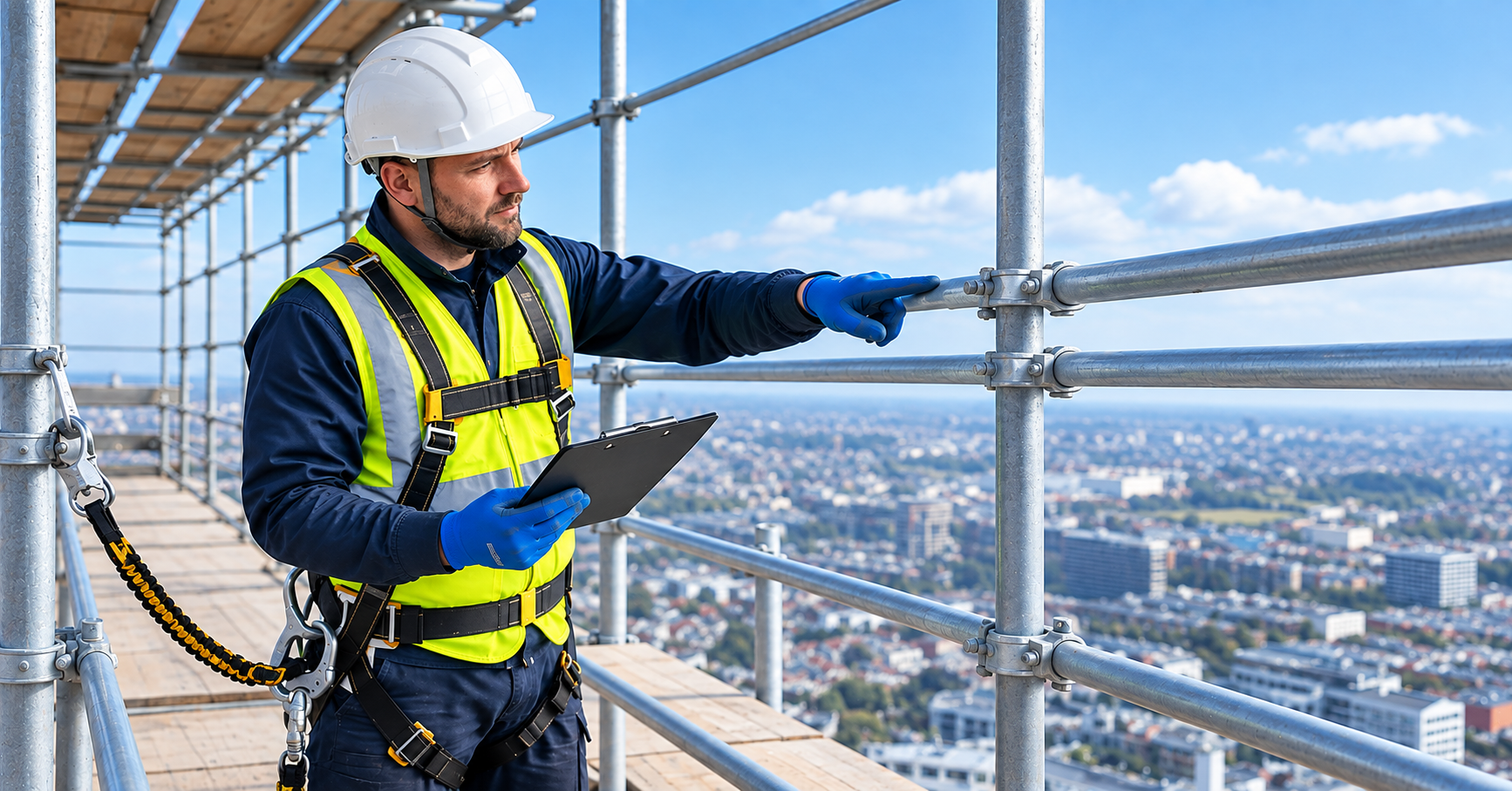
Falls from height remain the leading cause of fatal accidents in the construction industry in France. Yet most of these tragedies could be avoided by following a few simple rules well known to professionals. Whether you’re a site manager, project supervisor, or HSE officer, here are the essential best practices to keep scaffolding safe, from assembly to daily use.
Safety starts even before assembly. Go for professional-quality equipment with clear instructions from the manufacturer, and make sure it’s suitable for the intended use: a facade scaffold for exterior renovation has different requirements than a mobile scaffold for indoor work.
Assembling, disassembling, and modifying scaffolding are technical tasks that shouldn’t be improvised. They should be handled by trained and skilled personnel who can assess ground stability, structure anchoring, and the proper sequence of assembly steps. A qualified team leader should supervise the entire operation.
Before putting the scaffold into use, it needs to be checked as a whole. The key points to check are:
* the stability and anchoring of the structure,
* the presence of collective protections (guardrails, toe boards) at each level,
* the condition of the platforms and the absence of damaged or rusty equipment,
* adherence to the maximum allowable loads on each platform,
* marking on the ground to prevent falling objects.
This inspection must be documented before the teams start working on the structure.
Wind is one of the main risk factors on scaffolding high up. Beyond a certain point, work should be stopped: a simple rule, but too often ignored on job sites that are racing against deadlines.
A well-assembled scaffold can become dangerous if it is not properly maintained throughout the project:
* never repair damaged equipment yourself — only the manufacturer is authorized to refurbish it;
* immediately put back any collective protection moved during work;
* take into account co-activity on site to avoid creating risks for nearby teams;
* report any dangerous situation to the site manager without delay.
Worksite safety relies as much on good practices as on the quality of the equipment used. At Alchary, we offer a full range of facade scaffolding, rolling scaffolds, and safety accessories (guardrails, toe boards, access ladders), available for both purchase and rental depending on your worksite needs.
Need some tips to safely set up your construction site?
Get in touch with our experts or check out our scaffolding catalog directly.
 WhatsApp