
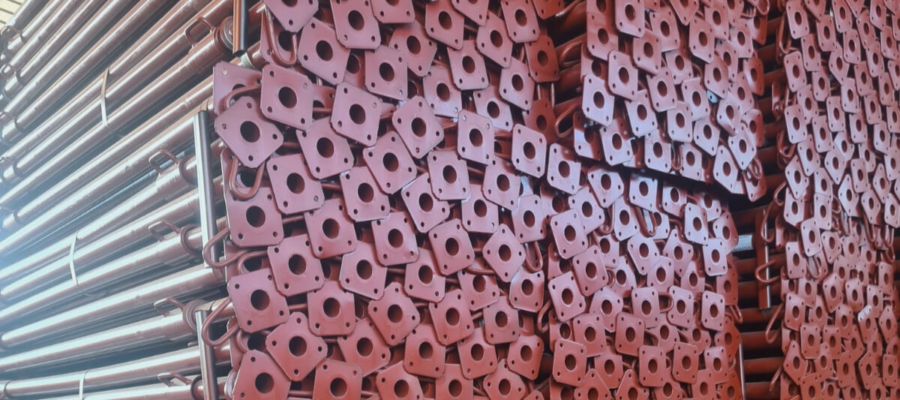
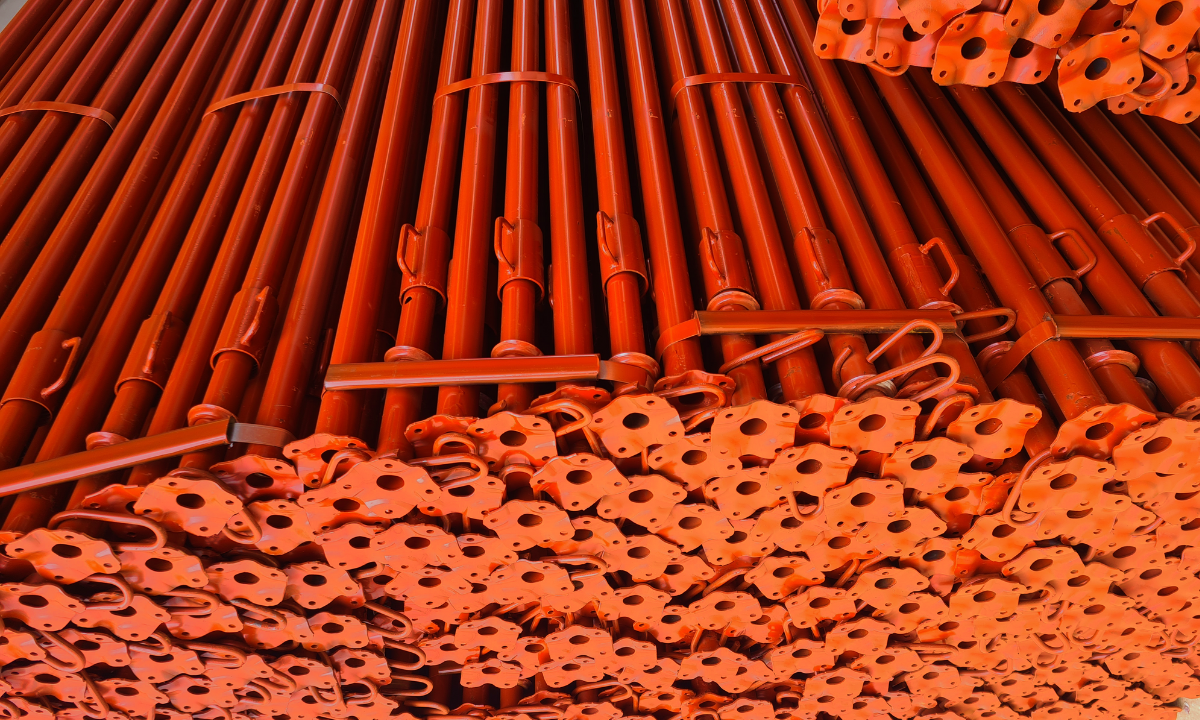
Shoring is an essential step in construction and renovation, ensuring temporary support for structures under works. Whether it is to stabilize a slab, a wall or a ceiling, the correct placement of a strut is crucial to ensure the safety of the construction site. In this article, we detail the key steps to place a strut by respecting safety standards and best practices.
What is a strut?
A strut is an essential temporary device in construction. It supports the structures during assembly or repair, thus providing essential stability. Made of metal or wood, it is used to support heavy vertical loads. This material allows to keep slabs, floors or beams in place. It also ensures the safety of workers by preventing any unforeseen collapse of the structure. In sum, the prop is a versatile tool that professionals and individuals use regularly.
Prepare the construction site
The preparation of the construction site is an essential step before the installation of the supports. Start by inspecting the area for irregularities or potential obstacles. A stable floor is essential for the installation of the prop. If necessary, use wooden wedges or plates to level the surface. This step ensures a more secure installation and reduces the risk of failure when using the struts. By doing so, you ensure a solid foundation for the rest of the work.
Install the base of the strut
Installing the strut base is a fundamental step to ensure its stability. The strut must be placed on a solid, flat surface capable of withstanding the pressure exerted by the load it supports. If the ground is not stable enough, reinforcements such as wooden wedges or load-distribution plates should be used. Proper installation of the base not only ensures worker safety, but also extends the durability of the equipment by reducing the risks of premature wear.
Adjust the height of the strut
Adjusting the height of the strut requires special attention. Each strut has an adjustment mechanism, often a nut or a screw. Carefully measure the necessary height and adjust it using the mechanism. After adjusting the height, firmly tighten all the elements to avoid any slipping. This keeps the strut stable and distributes the load evenly. Precise adjustment minimizes the risks of voltages or failures.
Check stability
Before starting the work, check the stability of the strut. It must be straight and show no oscillation. Inspect the shims and supports to verify their proper positioning and stability. Also make sure that all the clamping mechanisms are firmly fixed. If necessary, make adjustments to strengthen stability. This step is crucial to avoid any accident or deformation of the structure.
Multiple use of étais
The supports are not limited to supporting floors or beams. Thanks to their versatile design, you can use them to support walls, arches or even formworks. Some prop models have specific accessories that meet particular needs. For example, reinforcement frames or support plates can be added, which allows to increase the load capacity. This flexibility makes the struts suitable for a wide range of construction and renovation work, thus offering a versatile solution for many applications.
Common errors to avoid
Incorrect use of the étais can lead to significant risks. Common errors include placement on unstable ground, omission of regular checks or poor height adjustment. Moreover, never exceed the load capacity of the strut. To avoid these errors, always follow the manufacturer’s recommendations and carry out regular inspections. Train all workers in the use of the props to ensure their safety.
Conclusion
Installing and using étais requires careful attention at every step. By following good practices for site preparation, installation and adjustment of the supports, you ensure not only the safety of workers, but also the success of the work. Avoid common mistakes and ensure stability for optimal use of the equipment. The props, well used, play an essential role in construction and renovation, offering both support and safety.
Related Posts
