



Need advice on choosing the right scaffolding for your site?
Facade, roof, interior work, or finishing touches: each type of construction site requires a different scaffold. Fixed, rolling, or facade scaffolds, the right choice depends on the nature of the work, the height to reach, and the worksite environment. Here’s how to guide your choice and use it properly.
The first selection criterion is always the type of work to be done:
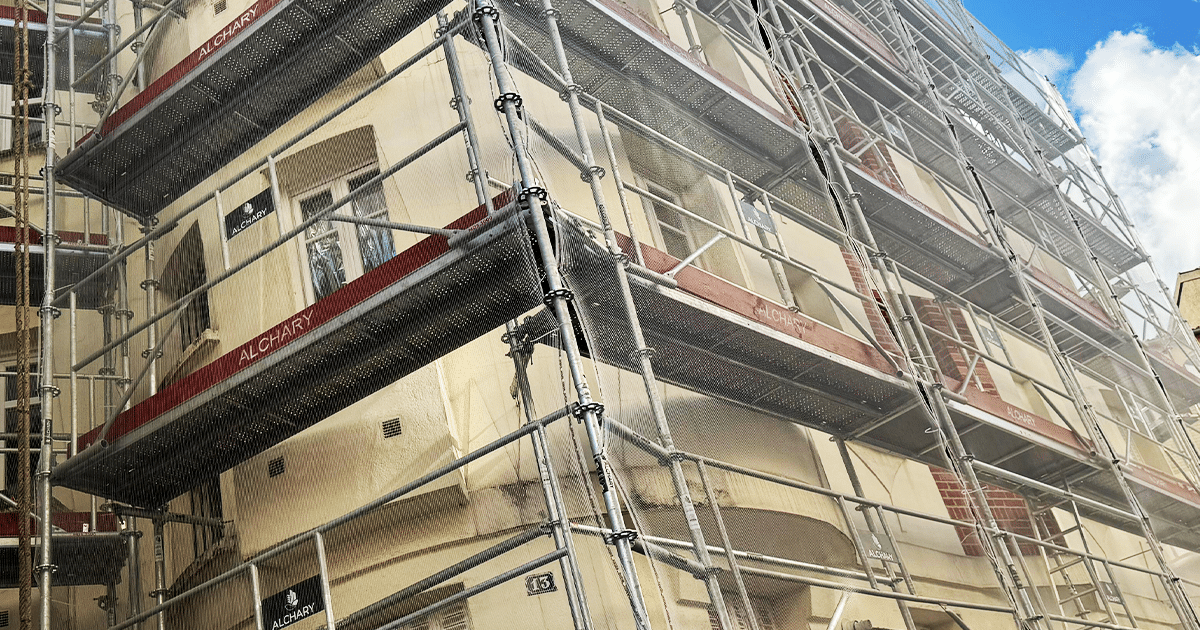
* Facade renovation or construction: a fixed scaffold (facade or multidirectional) provides the stability needed for long-term work across multiple levels.
* Roofing or framework work: a fixed scaffold suited to the slope, or a suspended scaffold, allows access to the roof without blocking the entire facade.
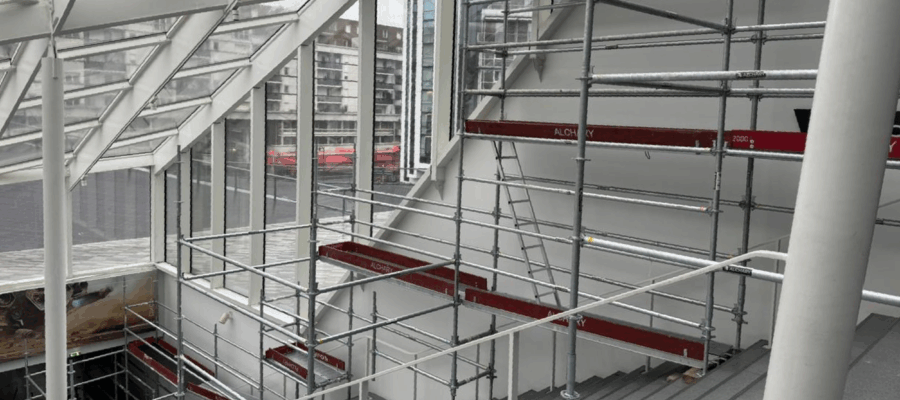
* Interior or finishing work (painting, electrical, plastering): a rolling scaffold, easy to move from one area to another, is better for occasional and repeated tasks.
* Short-term repairs or small jobs: an individual platform or a small rolling scaffold is often enough, without needing a full fixed structure.
Beyond the type of work, several factors help refine the choice:
* The actual working height, considering the floor heights and not just the height of the building;
* Frequency of use: a one-time project leans more towards renting, while regular use may justify purchasing;
* The worksite environment: ground type, presence of overhead power lines, proximity to traffic routes or public spaces;
* Typical weather conditions at the site, which influence the choice between a fixed structure and a lighter structure;
* The load to be supported: materials stored on the platforms, number of people working simultaneously.
Once you’ve picked the right type, a few simple rules ensure safe and efficient use:
* Never mix parts from different manufacturers: each system is designed to work with its own components;
* Avoid makeshift fixes to adjust height or stability (nails, concrete blocks, pieces of wood) and use the accessories provided by the manufacturer;
* Follow the maximum recommended height set by the manufacturer, without trying to exceed it with improvised extensions;
* Always stabilize the base, using adjustable jacks on uneven ground;
* Lock the wheels of a rolling scaffold before any use, and never move it with people on it.
For a one-time or short-term project, renting is still the most economical option and avoids the hassle of storage and maintenance. For a company that regularly does work at height, buying can become cost-effective in the medium term, as long as there’s a suitable storage space and maintenance of the equipment is planned between jobs.
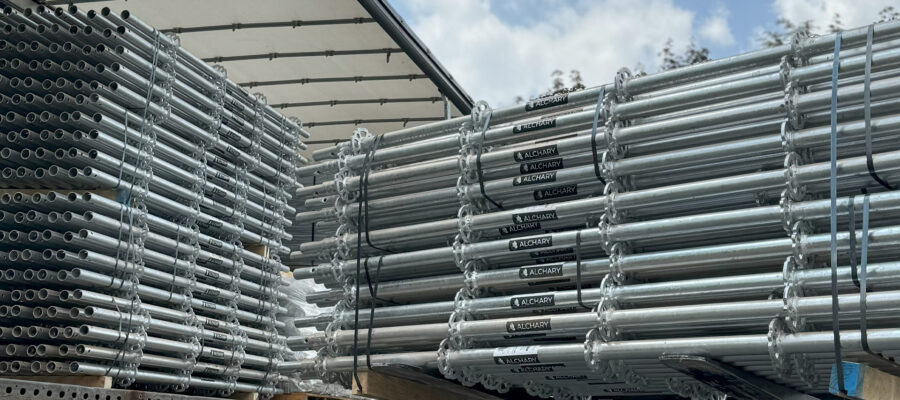
At Alchary, we offer a full range of fixed and rolling scaffolding, along with accessories (guardrails, platforms, stabilizers), available to buy or rent depending on how long your project lasts and what kind of work you’re doing.
Need advice on choosing the right scaffolding for your site?
Get in touch with our experts or check out our scaffolding catalog directly.

 WhatsApp