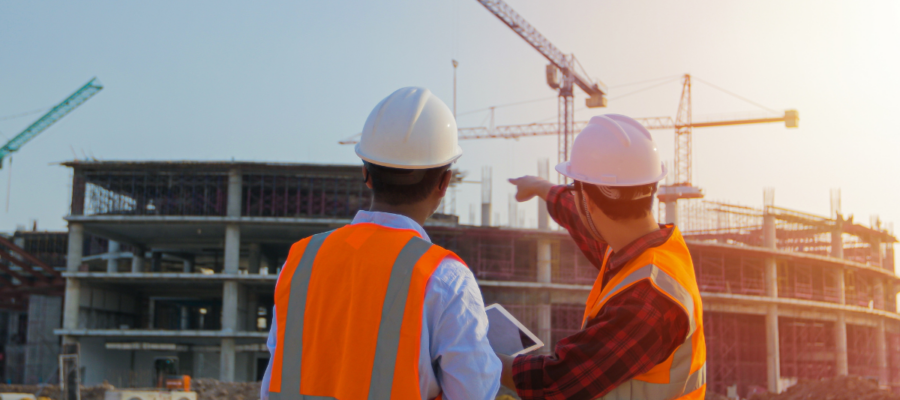

The safety on construction sites is a top priority, especially when it comes to formwork. Formwork plays a crucial role in the construction process. However, it exposes workers to significant risks. So, what is formwork and what are its types? What risks are associated with formwork? And above all, what is the prevention strategy to ensure the safety of workers in the face of these risks?
What is formwork?
Formwork definition
Formwork is an essential temporary structure in the construction process, serving to hold concrete in place until it hardens sufficiently to support both its own weight and applied loads. This temporary frame is generally made from materials such as wood, metal, and it is designed to give the concrete the desired shape while ensuring its stability. Formwork plays a crucial role in ensuring even load distribution during the hardening phase, which avoids deformations and cracks.
Formwork types
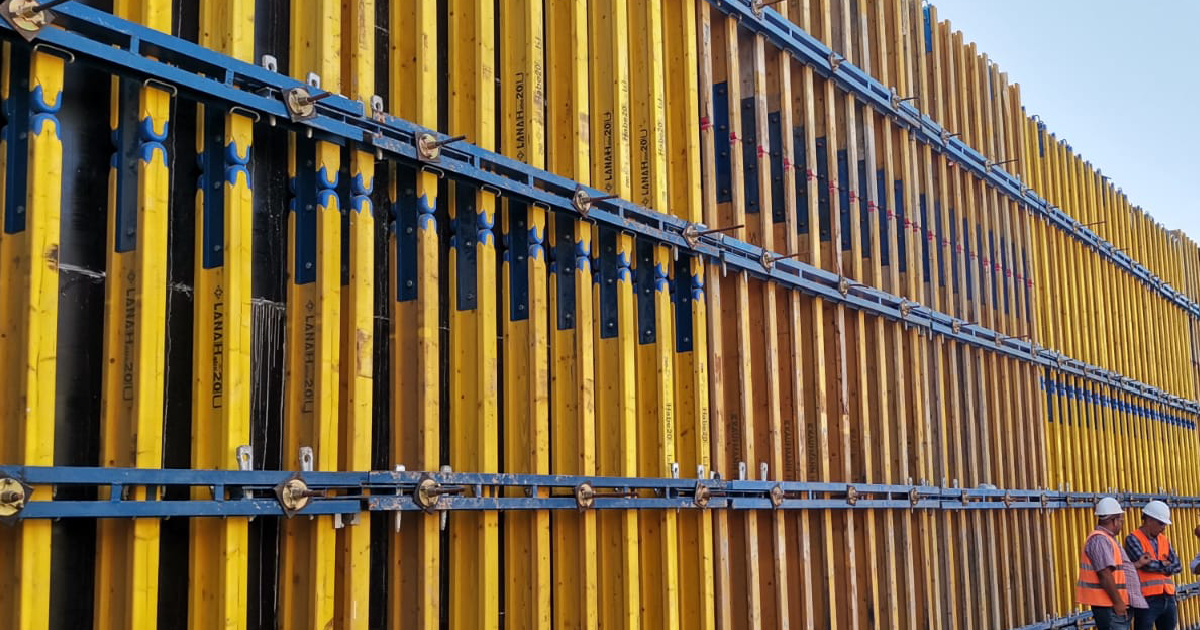
Formwork versatility is manifested through two essential types: post formwork and wall formwork. These two categories can be designed from various materials, such as wood or metal.
This flexibility allows for a wide range of solutions tailored precisely to the specific needs of each construction project. Whether it is to shape sturdy poles or erect vertical walls, the choice between wood and metal offers diverse possibilities to meet the unique requirements of each site.
Wooden formwork
Wooden formworks can be used in a variety of ways depending on the specific needs of each construction. Among the main applications, we find post formwork and web formwork. Formworks from wooden poles, made from specially designed panels, shape and maintain the shape of concrete poles during pouring. On the other hand, formwork in wooden sail, which are temporary structures, support the shape of walls during concrete pouring, thus ensuring the strength and shape of vertical walls.
Metal formwork
Formwork for metal post, designed for the creation of concrete posts, consists of a metal structure assembled around the post in order to keep the concrete in place during its hardening. This ensures the strength and shape of the pole. In parallel, formwork in metal sail is used to create high concrete walls.
The risks associated with formwork
Formwork collapse is a major risk when structures are not properly installed or overloaded. Indeed, such a failure can lead to serious consequences, such as injuries or deaths among workers. Furthermore, the delays and additional costs for the construction project are also significant repercussions of this incident. Thus, the rigorous implementation and systematic verification of formwork are essential to avoid these formwork risks.
Falls from height and falling objects also represent significant risks on construction sites, particularly during formwork work. Falls from height, in particular, can lead to serious injuries, permanent disabilities, or even death. Moreover, the falling objects around formwork structures pose a major danger. These falling objects can cause serious injuries to workers below, such as bruises, fractures and even severe head trauma. It is therefore crucial to adopt strict safety measures to protect workers against these formwork risks
Risk prevention strategies
Training and awareness
Training workers on safety practices is essential to prevent formwork related accidents. Awareness programmes are crucial. These programmes must inform workers of the specific hazards and preventive measures required. They must provide clear and relevant information. Moreover, it is important to update them regularly to incorporate the latest knowledge and best practices. Taking into account developments in the field of safety, workers will be able to apply appropriate measures, which reduces the risks of accidents on the construction site
Use of personal protective equipment (PPE)
Personal protective equipment (PPE) is essential for ensuring safety on construction sites. First of all, among them, helmets and safety harnesses play a crucial role. Indeed, helmets absorb shocks, thus protecting the head against impacts and drops of objects, which reduces the risk of serious injuries. At the same time, the safety harnesses, which are essential for work at height, prevent falls and offer effective protection against serious accidents. In addition, gloves and protective glasses complete this indispensable list. Depending on the materials handled, the gloves prevent cuts and burns on the hands. On the other hand, the glasses protect the eyes from splinters, dust and chemicals, thus reducing the risks of eye injuries.
In addition, the safety boots, reinforced, provide additional protection to the feet against heavy objects and punctures, while ensuring a good grip to prevent slipping. Furthermore, hearing protectors, such as earplugs or noise-cancelling headphones, are designed to reduce the risk of hearing damage in noisy environments. Finally, respiratory masks are essential to protect the respiratory tract from harmful dust, fumes and gases. It is therefore crucial to choose them based on the specific risks present on the site.
Regular inspection of formwork structures
Safety checks of formwork structures are essential to ensure their proper functioning throughout the construction process. It is therefore imperative to carry out regular inspections to verify that the structures are properly installed and maintained. These inspections must include the verification of all formwork elements, such as supports and reinforcements, to ensure that they are in good condition and comply with the technical specifications. Furthermore, it is crucial to control the loads applied on the formwork to ensure that they do not exceed the recommended limits. An overload can indeed lead to deformations or failures of the structure. By taking a proactive approach and carrying out these checks in a systematic way, it is possible to prevent potential risks and ensure the safety and quality of construction.
Using modern formwork systems
Modern formwork systems, such as modular formworks, offer several significant advantages that improve both the safety and efficiency of construction projects. First of all, these systems allow for quick installation thanks to their prefabricated design, which significantly reduces the time needed to set up the formwork. In addition, this speed of installation also contributes to a reduction in labor costs. At the same time, modular formworks are designed to be more stable, which reduces the risk of deformation or collapse, and thus improves safety on the construction site.
Furthermore, technological innovations play an essential role in the optimization of these systems. For example, the use of load sensors makes it possible to continuously measure the forces exerted on the formwork, while real-time monitoring systems provide instantaneous data on the state of the concrete and the formwork. Thanks to these technologies, it is possible to quickly detect potential problems and adjust the casting conditions accordingly. Thus, these advances contribute to preventing risks and ensuring optimal construction quality.
3. Concrete pouring: Techniques and advice
Pouring concrete requires both precision and speed of execution to prevent any problems. To succeed in this crucial step, follow these essential sub-steps. First of all, transport the concrete quickly to the site in order to maintain its fluidity and prevent it from starting to harden prematurely. Then, distribute it carefully into the formworks, starting with the most remote areas, which will facilitate work while ensuring uniform application. Furthermore, make sure to vibrate the concrete well once it is poured, in order to eliminate air bubbles and ensure a compact and solid structure. By following these steps, you will optimize the quality and durability of your concrete:
Concrete transport for efficient casting
Concrete must be transported to the construction site quickly and efficiently to prevent it from starting to harden prematurely. Depending on the size of the site, use wheelbarrows, pails or concrete pumps to move the concrete to the formwork. Rapid transport helps to maintain the fluidity of the concrete and ensure a uniform application. Also be careful not to overload the means of transport to avoid unexpected interruptions in the pouring process.
Placement of concrete in formworks
Once the concrete has arrived at the site, carefully pour it into the formworks ensuring it is evenly distributed. Start with the most remote areas to facilitate work and prevent the concrete from hardening before being completely poured. Correct placement is essential to obtain a uniform and solid structure. In addition, regularly check the depth of the poured concrete to avoid height variations that could affect the final quality.
Importance of concrete vibration during pouring
After setting up the concrete, it is crucial to vibrate it to remove air bubbles and ensure good compactness. Use concrete vibrators to obtain a smooth surface and avoid the formation of voids in the structure. Vibration helps improve the density of concrete and ensure a high-quality finish. By correctly applying this step, you minimize the risk of internal defects that could compromise the strength of the structure.
4. Concrete finishing
The concrete finish directly influences the aesthetics of the surface, but it is also crucial for the durability and functionality of the structure. To obtain an optimal result, it is important to carefully smooth the concrete after pouring, using suitable tools such as trowels and rulers. This step ensures a homogeneous and visually appealing surface. In addition, the creation of expansion joints is essential to prevent cracks due to thermal variations or material shrinkage. Finally, an adequate cure of the concrete, consisting in keeping it wet for several days, ensures uniform curing and maximizes the strength of the structure. By following these steps carefully, you will improve the longevity and efficiency of your concrete project.
Level and smooth the concrete after pouring
Immediately after pouring, use trowels and rulers to level the concrete surface. The smoothing must be carried out with care to obtain a homogeneous and aesthetic finish. A neat finish is important to ensure the performance and appearance of the concrete surface. Moreover, a well-smoothed surface facilitates subsequent finishing works and improves the durability of the surface.
Creation of expansion joints to avoid cracks
To prevent cracks due to thermal movement or concrete shrinkage, create expansion joints. These joints allow the concrete to expand or contract without cracking, thus improving the durability and longevity of the structure. Be sure to place the joints strategically based on the dimensions of the surface and climatic conditions.
Cures concrete to ensure maximum strength
To ensure even curing and avoid shrinkage cracks, concrete must be kept wet for several days. You can do this by regularly watering the surface, using moist tarps or applying specially designed curing products. Proper curing is essential to achieve maximum concrete strength. In addition, good curing promotes durability and resistance to varied climatic conditions.
5. Formwork removal and concrete inspection
Once the concrete has hardened, it’s time to move on to the final stages. Start by removing the formworks carefully to avoid damaging the edges of the concrete. Then, perform a thorough inspection of the work done. This check ensures that the structure is free of cracks and other defects, and meets the required quality and safety standards. These steps, although final, are crucial to ensure the durability and strength of your construction.
Unformwork: When and how to remove formworks
Formwork can be removed once the concrete has hardened sufficiently, usually after a period of 24 to 48 hours. It is important to proceed with caution to avoid damaging the edges of the concrete. Careful stripping allows the quality of the concrete finish to be preserved. By removing the formworks at the right time, you ensure a better finish and reduce the risk of damage
Final inspection to check the quality of the concrete
Finally, perform a thorough inspection of the concrete structure to check for the absence of cracks, defects, or other issues. This step ensures that the concreting has been carried out correctly and that the structure complies with safety standards. Rigorous inspection is essential to ensure the solidity and safety of the construction. Also ensure that all necessary corrections are made before the commissioning of the structure.
Conclusion
Concreting is a delicate operation that requires meticulous preparation and careful execution at every stage of the process. By carefully following the steps described, you can guarantee a successful concreting, ensuring the strength and durability of your constructions. The prevention of formwork risks at BTP worksites is also essential to avoid accidents and ensure the safety of all stakeholders. Comply with safety standards and curing times to achieve optimal results and extend the life of your concrete structures
Related Posts