
What are scaffolding load classes used for?
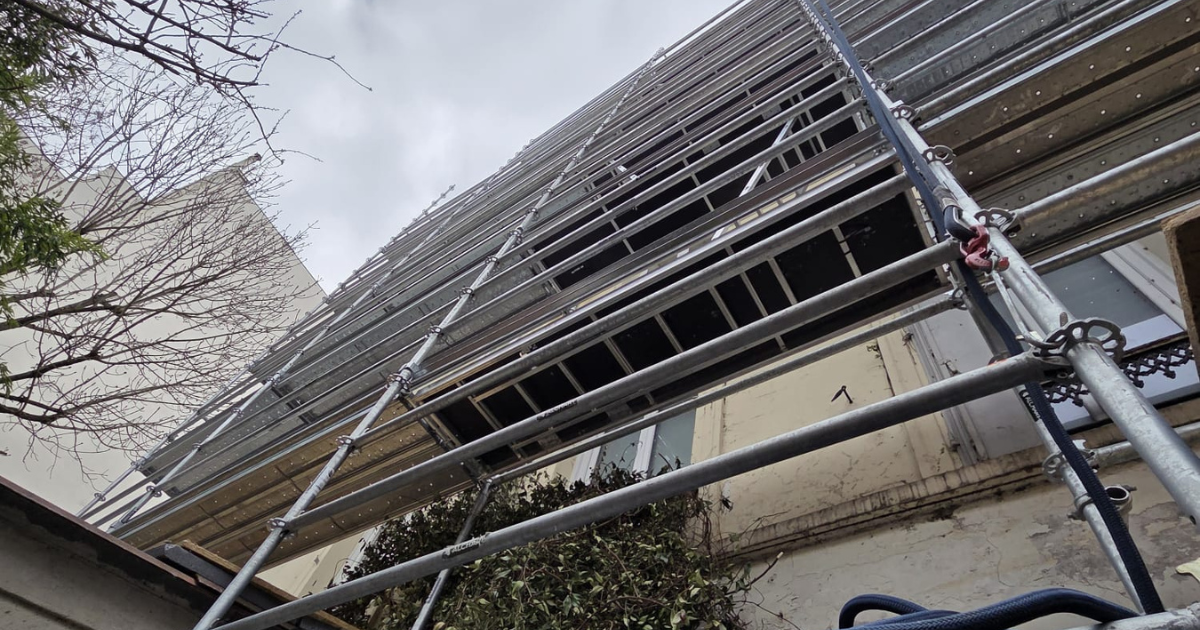
The NF EN 12811 standard distinguishes six classes of scaffolding, ranging from 75 kg/m2 to 600 kg/m 2. This classification allows companies to choose a structure adapted to the nature of the site: inspection, painting, light masonry or structural work.
The higher the class, the more weight the work surface can accommodate. This system ensures the stability of the scaffolding and the safety of operators, while avoiding dangerous overloads.
Classes 1 and 2: for light interventions without storage
A Class 1 scaffolding supports up to 75 kg/m 2. It is intended for control, inspection or small repair sites using light manual tools.
Class 2 allows to mount at 150 kg/m 2. It is suitable for simple tasks such as painting, grouting or plastering. These scaffoldings do not allow the storage of materials or heavy loads, because their design does not provide for it.
Class 3: a versatile solution for standard work
Professionals use class 3 scaffolding for sustained tasks like insulation, roofing, or facade work. With a capacity of 200 kg/m 2, they allow to place tools or materials, provided they are used immediately.
Caution: professionals must not use mechanical lifting systems (hoists, winches) on a class 3 scaffolding.
Classes 4 to 6: for large loads and stored materials
Masonry, framework, or structural work projects require robust structures.
1-Class 6 : supports 600 kg/m 2, perfect for heavy work such as stone cutting, framing or industrial sites.
2-Class 5 : up to 450 kg/m 2, it allows the storage of bricks, cement bags or mortar buckets directly on the platform.
3-Class 4 : 300 kg/m2 load capacity, ideal for brickwork, plastering or light concreting.
Load distribution: an essential point of vigilance
The load should never be concentrated on a single level. The standard mandates balanced distribution:
* a level can be loaded to 100%,
* the second, above or below, at 50% maximum.
This principle avoids the deformation or collapse of the structure.
Why choose the class of your scaffolding carefully?
Adapting the class to the actual use of the construction site optimizes safety, material durability, and productivity. Too light scaffolding will wear out quickly, or even fail. Conversely, an oversized model costs more and can slow down the installation.